
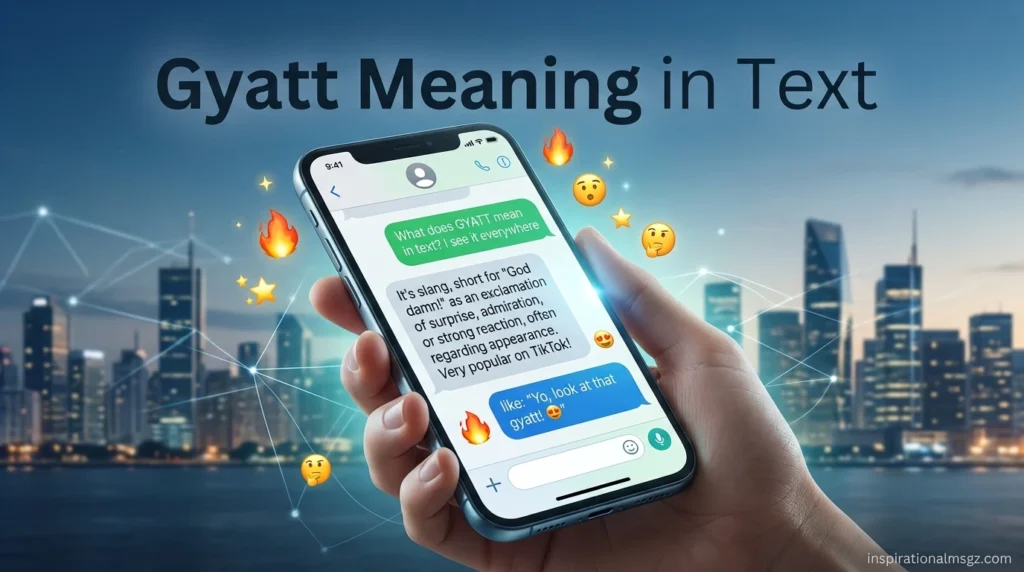
If you’ve been scrolling through TikTok comments, Instagram DMs, or group chats and suddenly saw someone type “gyatt,” you’re probably not alone in wondering what it means. Internet slang moves fast, and new words pop up almost every week, making it hard to keep up — especially for parents, teachers, or anyone who isn’t glued to Gen-Z social media trends.
Understanding terms like this isn’t just about staying “in the loop.” It helps you follow conversations, avoid awkward misunderstandings, and communicate confidently online. In this guide, we’ll break down the gyatt meaning in text in simple words, where it came from, how people actually use it on different apps, and how you can reply if someone says it to you.
What Does Gyatt Mean in Texting and Online Chat?
In simple terms, gyatt is slang typically used as an exclamation of surprise or admiration, most often directed at someone’s physical appearance — particularly a person’s body shape or figure. It works almost like an interjection, similar to saying “wow” or “damn,” but with a more exaggerated, meme-ified energy.
When someone texts “gyatt” after seeing a photo or video, they’re usually reacting strongly to what they see, often in an exaggerated or joking way rather than a completely serious one.
Full Form and Short Meaning
Many people ask, “What is the full form of gyatt?” The honest answer is that it doesn’t have an official full form. It’s widely believed to be a stretched-out, exaggerated version of the exclamation “goddamn”, shortened and altered through repeated use in memes and audio clips until it became its own standalone word.
So in short:
- Slang meaning: An exclamation reacting to someone’s appearance, usually their body.
- Origin word: Believed to come from a stylized pronunciation of “goddamn.”
- Tone: Can be playful, meme-based, exaggerated, or occasionally used sincerely.
Is Gyatt Always About Appearance?
Not always. Because of how memes spread, “gyatt” has also become a general-purpose reaction word. Some people now use it purely as a joke or a meme reference, without commenting on anyone specifically. It’s become detached from its original context in some corners of the internet, functioning more like a funny sound effect than a literal comment.
Where Did Gyatt Come From? Origin and Rise in Popularity
Slang words rarely appear out of nowhere — they usually spread through short-form video platforms, gaming communities, or viral audio clips. Gyatt is no exception.
The Origin Story
The word is generally traced back to basketball and gym culture, where commentators or streamers would react loudly to impressive plays or physiques using an elongated “gaaaaawd” or “goddamn” sound. Over time, this exclamation got clipped, stylized, and repeated in short clips until “gyatt” became its own recognizable meme sound.
How It Became Popular on TikTok
The real explosion happened on TikTok, where creators began using clips of people yelling “gyatt” as reaction sounds layered over videos. Because TikTok trends spread through sound and repetition, the word quickly became a meme in itself — used ironically, jokingly, or as a punchline rather than a literal comment.
Once a slang term hits TikTok’s algorithm hard enough, it typically jumps to:
- Instagram Reels and comment sections
- Twitter/X memes and quote-tweets
- Gaming voice chats and Discord servers
- Everyday texting between friends
This cross-platform spread is exactly what happened with gyatt, turning it from a niche audio clip into a widely recognized (if controversial) slang term.
How Gyatt Is Used in Real Conversations (With Examples)
Seeing the word in action makes the meaning much clearer. Here are some natural chat examples showing different tones.
Playful/Meme Use
Friend 1: “bro just hit that game-winning shot” Friend 2: “GYATTTT 😭🔥”
Here, “gyatt” has nothing to do with appearance — it’s just an exaggerated reaction to something impressive.
Appearance-Related Use
“she walked in and everyone just went ‘gyatt’ 💀”
This is closer to the word’s original meaning — a reaction to someone’s looks.
Ironic/Joking Use
“my mom asked why I ate the whole cake and I said ‘gyatt’ 😂”
This shows how far the word has drifted from its literal meaning into pure meme territory, used simply for comedic effect.
Gyatt Meaning on Different Platforms
Slang doesn’t always mean the exact same thing across every app. Here’s how usage tends to shift depending on where you see it.
Gyatt Meaning on WhatsApp
WhatsApp is more personal and conversational, so “gyatt” here usually appears in casual group chats between friends, often as a joking reaction to a photo, meme, or funny story someone shares. It’s rarely used with strangers.
Gyatt Meaning on Instagram
On Instagram, especially in comment sections or Reels, gyatt is commonly used as a quick reaction comment — either genuinely complimentary, playfully teasing, or purely meme-based depending on the page’s audience and tone.
Gyatt Meaning on TikTok
TikTok is really where the word lives. It’s used in:
- Comment sections reacting to videos
- Audio overlays as a comedic sound effect
- Captions referencing viral gyatt-related trends
Because TikTok content is fast-paced and meme-heavy, the meaning here leans more toward humor and exaggeration than literal commentary.
Gyatt Meaning on Snapchat
On Snapchat, since conversations are more private and disappear quickly, “gyatt” tends to be used casually between close friends, often as a joke, a reaction to a snap, or just for fun without much deeper meaning.
What Gyatt Does NOT Mean (Common Confusions)
Because slang spreads unevenly, a lot of people misunderstand or misuse this word. Here’s what to keep in mind.
- It’s not an insult by default. While it can be used teasingly, it’s generally not meant as a direct insult — though tone and context always matter.
- It’s not a formal or professional word. Never appropriate for schoolwork, workplace chats, or formal writing.
- It doesn’t always relate to appearance. As shown earlier, it’s frequently used as a pure meme reaction with zero connection to looks.
- It’s not universally understood. Many people outside Gen-Z internet culture won’t recognize the word at all, so context clues matter if you’re using it with a mixed audience.
- It’s not the same as being flirted with directly. It’s often more of a meme reflex than a genuine romantic comment, so reading too much into it can lead to misunderstandings.
Similar Slang Terms and Related Abbreviations
If you’re building your slang vocabulary, here are some related terms that often appear alongside gyatt in online conversations:
- Rizz – charisma or flirting skill
- Sus – suspicious
- No cap – no lie, being serious
- Bussin’ – really good (often about food)
- Slay – doing something impressively well
- W / L – win or loss, used to react to situations
- Mid – average or unimpressive
These words often appear together in the same meme-heavy conversations, so recognizing them as a group makes it easier to follow modern chat slang overall.
How to Reply When Someone Says Gyatt to You
Knowing the meaning is one thing — knowing how to respond naturally is another. Here are a few directions you can take depending on your comfort level.
Polite/Neutral Responses
- “Haha thanks!”
- “Lol okay 😂”
- “Appreciate it!”
Playful/Friendly Responses
- “Stoppp 😭”
- “I know, I know 💅”
- “You’re so dramatic lol”
Flirty Responses (if context is appropriate)
- “Oh really? 👀”
- “Careful now 😏”
- “Is that a compliment?”
Boundary-Respecting Responses
If the comment feels uncomfortable or inappropriate, it’s completely okay to set a boundary:
- “Let’s keep it respectful please.”
- “Not really into comments like that.”
- “I’d rather you not say that.”
There’s no single “correct” reply — the best response depends on your relationship with the person and the tone of the conversation.
Is Gyatt Still Popular? Current Trends and Gen-Z Slang Culture
Like most viral slang, gyatt has gone through phases. It peaked heavily in meme culture, especially around 2023, and while it’s not always trending at the same intensity, it’s still recognized and used — particularly ironically or nostalgically referencing its “peak meme” era.
Gen-Z slang tends to move in cycles:
- A word emerges from a niche community.
- It goes viral through short-form video.
- It becomes oversaturated through overuse.
- It shifts into ironic or joking usage.
- It either fades out or becomes a recognizable internet culture reference.
Gyatt currently sits somewhere between stages 3 and 5 — still understood and occasionally used, but less as a genuine reaction and more as a nostalgic or comedic callback to its meme peak.
FAQs
What does gyatt mean in a text message?
It’s slang typically used as an exaggerated exclamation of surprise or admiration, often reacting to someone’s appearance or an impressive moment, similar to saying “wow” or “damn.”
What is the full form of gyatt?
Gyatt doesn’t have an official full form. It’s believed to be a stylized, shortened version of “goddamn,” shaped by memes and viral audio clips.
Is gyatt a compliment or an insult?
It depends on context and tone. It’s most often used playfully or as a compliment, but it can occasionally be used teasingly, so reading the conversation matters.
What does gyatt mean on TikTok specifically?
On TikTok, gyatt is mainly used as a meme reaction — either as an audio overlay, a comment, or a joking exclamation, often disconnected from its literal meaning.
Is gyatt still used in 2026?
It’s less viral than during its meme peak but still recognized and occasionally used, often ironically or as a nostalgic reference to internet culture.
Should I use gyatt in formal writing or messages?
No. It’s casual internet slang best kept to informal chats with friends, not appropriate for school, work, or formal communication.
Conclusion
So, what does gyatt mean in text? At its core, it’s an exaggerated slang exclamation — often reacting to someone’s appearance or an impressive moment — that grew out of meme culture and exploded through TikTok. While its original meaning leans toward admiration or surprise, it’s frequently used today as a pure meme reaction with little literal meaning at all. Understanding where it came from, how it’s used across platforms like WhatsApp, Instagram, TikTok, and Snapchat, and how to respond to it confidently can help you navigate modern online conversations without confusion. Like most internet slang, its popularity may rise and fall, but knowing its meaning ensures you’re never caught off guard when it shows up in your chats.