
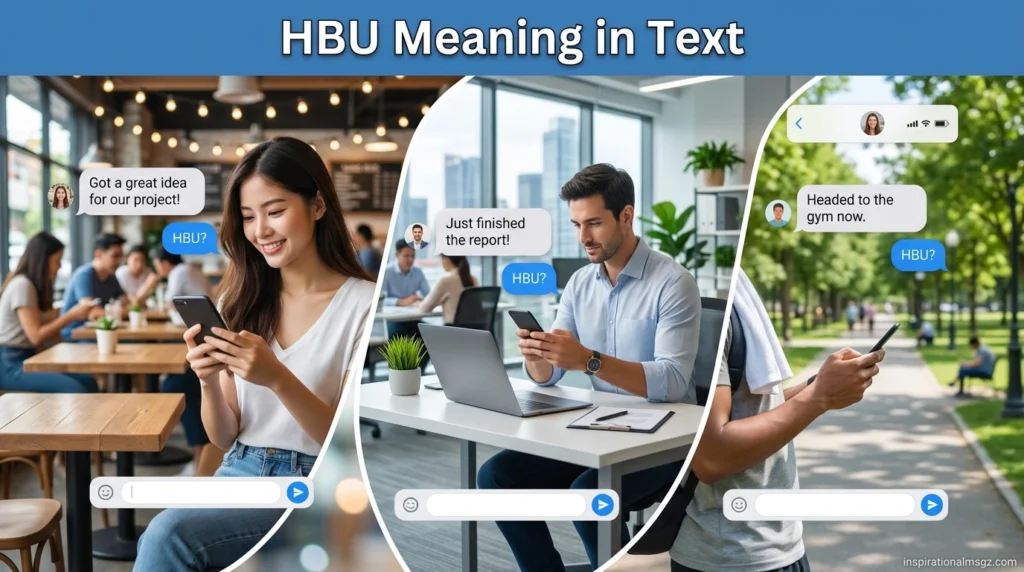
Ever been chatting with someone and they suddenly typed “hbu” at the end of their message? If you paused and thought, “wait, what does that even mean?” — you’re definitely not alone. Texting and online chatting move fast, and new abbreviations pop up (or become popular again) all the time.
Understanding slang like this isn’t just about keeping up with trends; it’s about keeping conversations smooth, natural, and free of awkward pauses where you’re secretly Googling instead of replying. In this guide, we’ll break down exactly what “hbu” means, where it came from, how people use it on apps like WhatsApp, Instagram, TikTok, and Snapchat, and how you can reply to it like a pro — whether you want to keep things friendly, flirty, or simply polite.
What Does HBU Mean in Texting and Online Chat?
At its core, hbu is a short and casual way of asking someone about themselves after you’ve just answered a question they asked you. It’s one of those small texting abbreviations that keeps conversations flowing without making messages feel long or formal.
If someone asks, “How are you doing today?” and you reply “Good, hbu?” — you’re simply turning the question back around. It’s quick, friendly, and saves a few seconds of typing, which matters a lot in fast-paced chats.
HBU Full Form and Short Meaning
The full form of hbu is:
“How About You?”
That’s it — no hidden meaning, no complicated backstory. It’s simply a shortcut for a common question people ask in everyday conversations, whether in person or online.
In short:
- HBU = How About You?
- Used to redirect a question back to the person you’re talking to
- Common after answering questions about mood, plans, food, weekend activities, or general updates
It’s considered part of everyday texting slang meaning, similar to other common shortcuts people use to type faster and sound more casual.
Why People Use HBU Instead of Typing It Out
Texting culture is built around speed and casualness. Typing “how about you” takes a few extra seconds, and in fast back-and-forth conversations, especially on apps like Snapchat or Instagram DMs, people naturally shorten things. Using hbu also gives a conversation a more relaxed, friendly tone compared to spelling everything out formally.
The Origin and Rise in Popularity of HBU
Text abbreviations like hbu didn’t appear overnight. They grew out of early instant messaging culture, back when typing speed and character limits mattered a lot more than they do today.
Where HBU Came From
Abbreviations similar to hbu became common during the early days of SMS texting and instant messenger platforms, when people paid per text message or wanted to type responses quickly on small phone keypads. Around the same time, similar shortcuts like “wyd” (what you doing) and “hru” (how are you) became popular for the same reason — speed and simplicity.
As messaging apps evolved, so did the way people used these abbreviations. What started as a way to save time became part of natural texting language, especially among teens and young adults who grew up chatting online.
How HBU Became Popular Again With Gen Z
Even though hbu isn’t a brand-new term, it has stayed relevant because of how naturally it fits into modern chat culture. Gen Z conversations tend to favor short, casual exchanges over long typed-out sentences, and hbu fits perfectly into that style. It shows up constantly in:
- Group chats
- Direct messages
- Comment replies
- Story reply threads
Because it’s simple, easy to understand, and doesn’t require any explanation, it has remained a steady part of everyday internet slang meaning rather than a passing trend.
How HBU Is Used in Real Conversations
The best way to understand hbu is to see it in action. Here are some natural chat examples showing how people commonly use it.
Example 1: Casual Daily Check-In
Person A: hey! how’s your day going? Person B: pretty good, just finished class. hbu? Person A: same here, about to grab food
Example 2: Weekend Plans
Person A: any plans this weekend? Person B: probably just relaxing at home, hbu? Person A: thinking about going hiking if the weather’s nice
Example 3: Quick Mood Check
Person A: you good? Person B: yeah I’m okay, a bit tired though. hbu? Person A: same, long day at work
In every example, hbu works the same way — it’s a quick, natural way to keep the conversation balanced instead of only talking about yourself.
HBU Meaning on Different Platforms
While the meaning of hbu stays the same everywhere, the way it’s used can slightly shift depending on the platform and the type of conversation happening there.
HBU Meaning on WhatsApp
On WhatsApp, conversations tend to be more personal since most chats happen with people you already know — friends, family, or coworkers. Here, hbu is usually used in everyday check-ins, like asking how someone’s day or week is going. It keeps casual conversations feeling warm without needing long replies.
HBU Meaning on Instagram
On Instagram, especially in DMs or comment replies, hbu often appears in shorter, more casual exchanges. Someone might comment “loving this weather!” and someone replies “same, hbu?” It’s common in story replies too, where quick back-and-forth chats happen throughout the day.
HBU Meaning on TikTok
The hbu meaning on TikTok is very similar to Instagram, but it shows up a lot in comment sections and duet or stitch conversations. Since TikTok comments are meant to be quick and engaging, hbu is a natural fit for keeping a comment thread going without long paragraphs.
HBU Meaning on Snapchat
Snapchat conversations move fast, especially with Snap streaks and quick photo replies. Because chats here are meant to feel spontaneous and casual, hbu is extremely common in text captions or direct chat messages, especially after a simple “what’s up” or “how’s it going” type of snap.
HBU vs Unrelated Meanings: Avoiding Confusion
Slang terms can sometimes overlap with unrelated meanings, especially with abbreviations that look similar or get typed quickly without much thought. It’s important to separate the internet slang meaning of hbu from any other unrelated use of similar-looking terms.
In everyday online conversations, hbu almost always means “how about you” and is not typically associated with any other unrelated abbreviation or acronym used in different contexts like gaming, business, or technical writing. If you ever see an abbreviation that looks similar but appears in a completely different context (like a business report or gaming forum), it’s likely referring to something entirely different and unrelated to texting slang.
The safest approach: if hbu appears in a casual chat, DM, or comment section, it’s referring to “how about you.” If it appears somewhere formal or technical, it’s probably a different term altogether and not the texting slang version.
Common Confusions and What HBU Does NOT Mean
Even though hbu is simple, a few common misunderstandings pop up, especially for people newer to texting slang.
What HBU Is Often Mistaken For
- Some assume it’s a typo for “hub” — it’s not.
- Some think it might be a name or username — it isn’t.
- Some confuse it with “hru” (how are you) — they’re related but not identical.
What HBU Does Not Mean
To clear up any confusion, here’s what hbu is not:
- It does not mean “hit back up”
- It does not mean “have you”
- It is not a flirty term by itself (though it can appear in flirty conversations)
- It does not signal anything negative or passive-aggressive
- It is not sarcastic unless the tone of the conversation clearly suggests it
Essentially, hbu is a neutral, friendly phrase. Its tone depends entirely on the conversation around it, not the abbreviation itself.
Similar Slang Terms and Related Abbreviations
If you’re learning hbu, it helps to know similar texting shortcuts that serve the same purpose or appear in similar conversations.
Common Alternatives to HBU
- HRU – How are you
- WYD – What you doing
- SUP – What’s up
- HOWU – How are you (less common spelling variation)
- U? – Simply “you?” used the same way as hbu
Related Everyday Texting Abbreviations
- BRB – Be right back
- GTG – Got to go
- IDK – I don’t know
- NVM – Never mind
- TTYL – Talk to you later
These terms often appear in the same conversations as hbu, especially in casual chats where speed and simplicity matter most.
How to Reply When Someone Says HBU
Knowing how to respond naturally is just as important as understanding the meaning itself. Your reply can set the tone for the rest of the conversation, so here are a few different response styles depending on the vibe you’re going for.
Polite and Friendly Responses
- “I’m doing well, thanks for asking!”
- “Pretty good, just relaxing today.”
- “I’m okay, a little busy but managing.”
These responses work well for casual friendships, coworkers, or people you’re not super close with yet.
Flirty Responses (When the Conversation Allows It)
- “Better now that you texted me.”
- “Good, but I’d be better hanging out with you.”
- “I’m great, thinking about our last conversation actually.”
These work well only when the conversation already has a playful or flirty tone. Using them out of context can come across as forced, so read the room first.
Boundary-Respecting Responses
If you’re not comfortable sharing much, or you want to keep things brief without seeming rude, try:
- “I’m doing fine, just keeping busy.”
- “All good here, thanks!”
- “Same as usual, nothing new.”
These replies are neutral, polite, and don’t require oversharing, which is perfect for conversations with people you don’t know very well.
Is HBU Still Popular? Current Trends and Gen Z Slang Culture
Yes — hbu remains one of the most consistently used texting abbreviations today. Unlike some slang terms that fade quickly after going viral, hbu has stayed relevant because it’s practical, easy to understand, and doesn’t rely on trends or memes to make sense.
Why HBU Has Stayed Relevant
- It’s simple and doesn’t need explanation
- It fits naturally into fast-paced digital conversations
- It works across all major messaging platforms
- It’s used by multiple age groups, not just Gen Z
HBU in Gen Z Chat Culture
While hbu isn’t exclusive to Gen Z, it fits comfortably into their preferred texting style — short, casual, and conversational. Gen Z tends to favor efficient communication that still feels personal, and hbu checks both boxes. It’s likely to remain a common part of digital conversations for years to come, simply because it serves a timeless purpose: keeping conversations balanced and engaging.
FAQs
What does hbu mean in a text message?
HBU means “How About You?” It’s used to redirect a question back to the person you’re chatting with, usually after answering something they asked first.
Is hbu the same as hru?
Not exactly. HRU means “How Are You,” which is typically used to start a conversation, while hbu is used to respond back after answering a question, making it more of a follow-up phrase.
Can hbu be used in flirty conversations?
Yes, hbu itself is neutral, but depending on the context and the reply that follows, it can definitely be used in playful or flirty conversations.
Is hbu only used by teenagers?
No, while it’s popular among teens and young adults, people of many age groups use hbu because it’s simple, practical, and easy to understand.
What does hbu mean on TikTok or Instagram?
On both platforms, hbu carries the same meaning — “how about you” — and is commonly used in comment replies, DMs, and story responses to keep quick conversations going.
Is it rude to not reply when someone says hbu?
Not necessarily rude, but replying is generally considered polite since it keeps the conversation balanced. If you don’t want to continue the conversation, a short and polite reply is usually better than ignoring it completely.
Conclusion
At the end of the day, hbu is one of the simplest and most widely used pieces of internet slang out there. It stands for “How About You?” and is mainly used to keep conversations balanced by turning a question back to the other person. Whether you come across it on WhatsApp, Instagram, TikTok, or Snapchat, its meaning stays consistent, even if the tone around it changes depending on the conversation. Now that you know its full form, origin, common uses, and how to reply in different situations — polite, flirty, or boundary-respecting — you can confidently understand and respond whenever you see hbu pop up in your chats.