
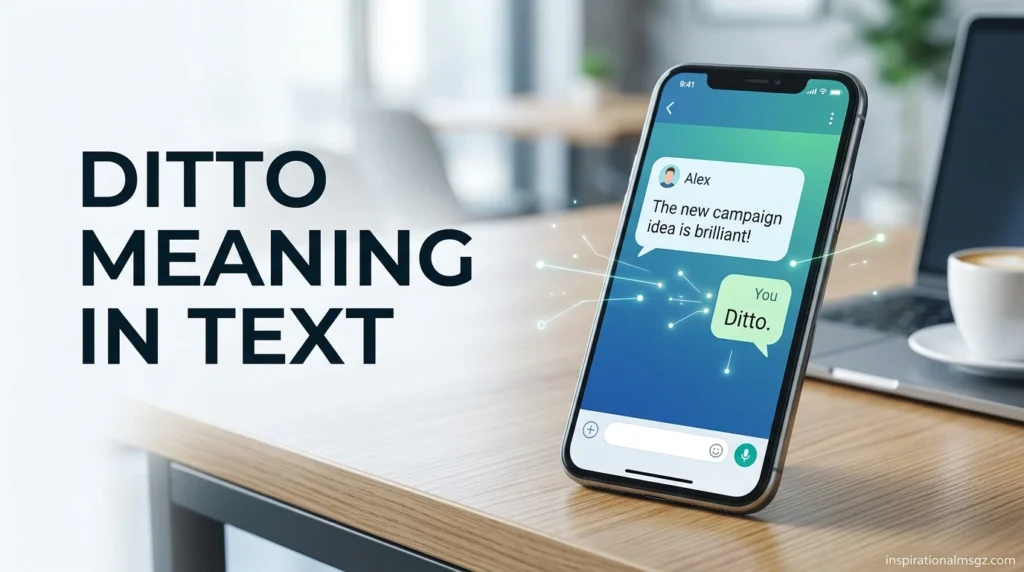
If you’ve ever received a text that just says “ditto” and paused wondering what to reply, you’re not alone. This tiny word shows up everywhere — in DMs, group chats, TikTok comments, and even casual conversations with friends — but its meaning can shift depending on tone and context. Understanding slang like this matters more than ever because so much of how we connect today happens through short, quick messages instead of full sentences.
A single word can carry warmth, agreement, or even flirtation, and misreading it can lead to awkward misunderstandings. In this guide, we’ll break down exactly what “ditto” means in texting, where it came from, how people use it on different apps, and — most importantly — how you can reply to it with confidence, whether you want to keep things casual, friendly, or a little flirty.
What Does “Ditto” Mean in Texting?
At its core, “ditto” is a quick way of saying “same here” or “I feel the same way.” Instead of typing out a full response, people use this one word to agree with or mirror what the other person just said.
For example:
Sam: I had such a long day, I just want to sleep. Jordan: Ditto.
Here, Jordan isn’t repeating Sam’s exact words — they’re simply saying, “I feel the same.” That’s the beauty of this slang term: it’s short, effortless, and instantly understood.
Full Form and Short Meaning
Unlike many text abbreviations (like “brb” or “omw”), “ditto” isn’t shortened from a phrase — it’s a standalone word borrowed from everyday English and repurposed for texting culture. In simple terms:
- Full meaning: “The same as what you just said” or “I agree completely”
- Short meaning in chat: “Same,” “Me too,” or “I feel that”
It works as a stand-in for a longer emotional or conversational response, saving time while still keeping the connection warm.
Where Did “Ditto” Come From? Origin and Rise in Popularity
The word “ditto” isn’t new — it’s actually been part of the English language for centuries, originally used in writing and printing to mean “the aforementioned” or “same as above.” You’ve probably seen ditto marks (“) used in lists or tables to avoid repeating a word.
Its jump into pop culture really took off after the 1990 movie Ghost, where the line “Ditto” became a famous, emotionally loaded way of saying “I love you too” without repeating the exact words. That scene planted the idea that “ditto” could carry deep meaning in just one syllable.
Fast forward to today, and texting culture brought the word back in a big way. Short, punchy replies are the backbone of modern digital conversation, and “ditto” fits perfectly into that style — especially among teens and young adults who value quick, expressive communication over long paragraphs.
How “Ditto” Is Used in Real Conversations
The beauty of this word lies in its flexibility. Depending on the context, it can express agreement, shared feelings, or even affection. Here are some natural chat examples:
Casual agreement:
Friend: This weather is way too hot. You: Ditto, I’m melting.
Shared emotion:
Friend: I miss the old friend group. You: Ditto. Things were simpler back then.
Light flirting:
Crush: I can’t stop thinking about you. You: Ditto 😊
Notice how the tone of the conversation changes the emotional weight of the same word. That’s what makes “ditto” such a versatile piece of internet slang.
Platform-Specific Usage: How “Ditto” Shows Up on Different Apps
While the core meaning stays the same, how “ditto” gets used can vary slightly depending on the platform and its culture.
Ditto Meaning on WhatsApp
On WhatsApp, “ditto” is mostly used in personal or group chats as a quick reaction to something relatable. Since WhatsApp conversations tend to be more personal and ongoing (like with family or close friends), “ditto” often shows up as a warm, informal way to agree without breaking the flow of conversation.
Ditto Meaning on Instagram
On Instagram, especially in DMs or comment sections, “ditto” is frequently used to react to captions, stories, or comments that resonate. For example, someone might comment “ditto” under a post about relatable struggles, essentially saying, “Same experience here.”
Ditto Meaning on TikTok
TikTok comments are where this word truly shines. When a video captures a relatable feeling — like Sunday scaries or missing someone — you’ll often see “ditto” as one of the top comments, sometimes racking up thousands of likes because so many viewers feel exactly the same way.
The “meaning on TikTok” version of ditto is almost always about collective relatability — it’s less personal and more about mass agreement with a trend, sound, or feeling.
Ditto Meaning on Snapchat
On Snapchat, where conversations are often quick, private, and back-and-forth, “ditto” is used similarly to texting — usually to mirror a feeling shared in a snap caption or chat message, often in a more intimate or flirty tone since Snapchat conversations tend to be closer and more casual.
Clearing Up Confusion: What “Ditto” Does NOT Mean
Because slang can be tricky, it’s easy to misread this word. Here’s what “ditto” does not mean:
- It does not always mean romantic love — context decides that, not the word itself.
- It’s not sarcastic by default, though tone in a conversation can shift it that way.
- It doesn’t mean exact repetition of words — it means “the same feeling or idea,” not “I am typing your exact sentence back to you.”
- It’s not the same as saying “okay” or “sure” — it specifically implies agreement or shared experience, not just acknowledgment.
If you’re ever unsure, look at the sentence before it. That’s usually where the real meaning lives.
Similar Slang Terms and Alternatives
If you want to mix things up instead of always typing “ditto,” here are some popular alternatives with similar meanings:
- Same – simple and direct
- Facts – often used to agree strongly, especially in casual or Gen-Z chats
- Mood – used when something relates to your current feelings
- Big same – an exaggerated version of “same”
- SFM (Same For Me) – a texting abbreviation with the same intent
- Word – older slang, still used casually to mean agreement
- Vibe – used when the feeling matches, more than the exact statement
These alternatives can help keep conversations feeling fresh and natural instead of repetitive.
How to Reply When Someone Says “Ditto” to You
Knowing how to respond keeps the conversation flowing smoothly. Here are a few different reply styles depending on your comfort level and the vibe of the conversation.
Polite and Neutral Replies
- “Haha, glad it’s not just me.”
- “Good to know we’re on the same page.”
- “That’s comforting to hear.”
Friendly and Warm Replies
- “Ditto right back at you 😊”
- “Same here, we’re basically twins.”
- “I feel that so much.”
Flirty Replies (if the context invites it)
- “Ditto? That’s cute.”
- “Careful, saying that might make me smile too much.”
- “I was hoping you’d say that.”
Boundary-Respecting Replies (if you want to keep distance)
- “Haha, appreciate that.”
- “That’s sweet of you to say.”
- “Noted!” (light and non-committal)
The key is to read the emotional tone of the conversation before choosing your reply style. A single word like “ditto” can mean different things depending on who says it and when.
Is “Ditto” Still Popular? Current Trends and Gen-Z Slang Culture
Yes — “ditto” remains a relevant and widely used piece of internet slang, especially in casual texting and comment sections. While newer slang terms constantly emerge, “ditto” has stayed popular because of its simplicity and emotional flexibility.
In Gen-Z slang culture, short reactionary words are extremely valuable. Instead of writing long responses, users prefer quick, expressive words that still carry meaning — and “ditto” checks that box perfectly. It also benefits from nostalgic pop-culture references, making it feel both classic and current at the same time.
Expect to keep seeing it in:
- TikTok comment sections
- Instagram story replies
- Casual texting between friends
- Light, flirty conversations
It’s a small word, but its emotional efficiency keeps it alive in digital conversations.
FAQs
1. What does “ditto” mean in a text message?
It means “same here” or “I feel the same way.” It’s a quick way to agree with what someone just said without repeating their exact words.
2. Is “ditto” a flirty word?
It can be, depending on context. If used in a romantic or emotional conversation, “ditto” can carry an affectionate or flirty tone, similar to its famous use in the movie Ghost.
3. What is the full form of “ditto” in chat?
There isn’t a literal full form — “ditto” is a standalone word meaning “the same as what was just said.”
4. What does “ditto” mean on TikTok?
On TikTok, it usually means a large number of viewers relate to the same feeling or experience shown in a video, often used in the comments section.
5. How do you reply when someone says “ditto” to you?
You can reply casually (“Same here”), warmly (“Ditto right back at you”), flirtatiously (“That’s cute”), or neutrally (“Good to know”), depending on the vibe of the conversation.
6. Is “ditto” still used in 2026?
Yes, it remains popular, especially in casual texting, TikTok comments, and Gen-Z slang culture, thanks to its simplicity and emotional flexibility.
Conclusion
“Ditto” is a small word with big flexibility. At its core, it simply means “same here” or “I agree,” but depending on tone, platform, and context, it can express anything from casual agreement to warm affection or subtle flirtation. Whether you spot it in a WhatsApp chat, an Instagram comment, or a trending TikTok video, understanding the emotional undertone behind it will help you respond naturally and confidently. Now that you know its meaning, origin, and how to reply in different situations, you’ll never have to second-guess that one-word text again.