
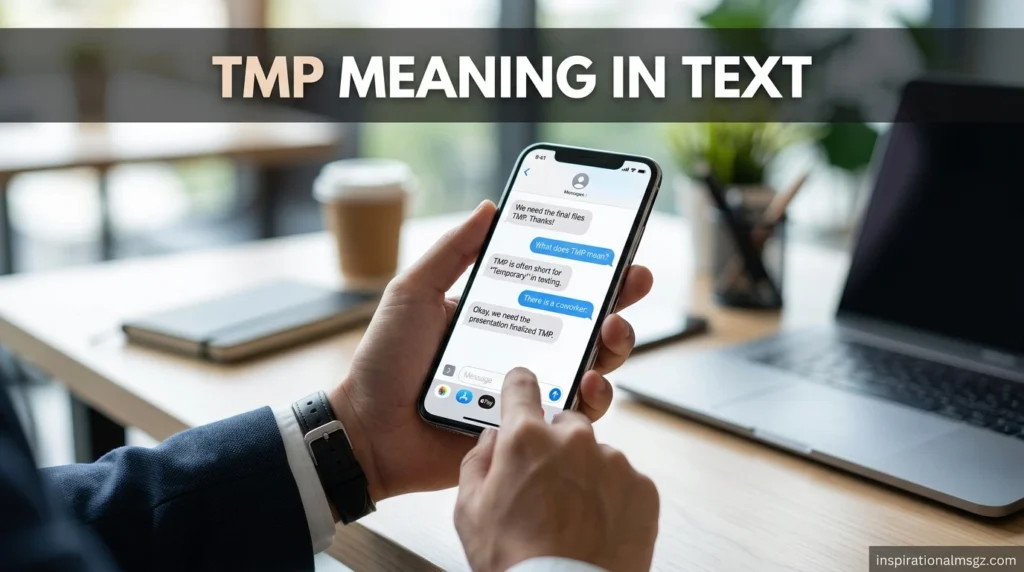
If you’ve ever gotten a message that just says “TMP” and felt totally lost, you’re not alone. Texting today is full of shortcuts, and it can feel like everyone else got a secret handbook you never received. That’s exactly why so many people search for “tmp meaning in text” every single day — it’s a small acronym, but it shows up everywhere, from WhatsApp chats to Instagram comments.
Understanding slang like this isn’t just about keeping up with trends. It’s about actually understanding what people mean, replying the right way, and not accidentally sending the wrong signal back. In this guide, we’ll break down exactly what TMP means, where it came from, how it’s used on different apps, and how you can reply to it with confidence — whether you want to keep things casual, friendly, or a little flirty.
What Does TMP Mean in Texting?
At its core, TMP is short for “Text Me Please.” It’s a quick, casual way of asking someone to send you a message. Instead of typing out a full sentence, people just type three letters, and the meaning gets across instantly.
Think of it like a small nudge. Someone can’t call right now, or they’re busy, but they still want to stay connected. So they drop a “TMP” instead of writing “hey, message me when you get a chance.”
TMP Full Form and Short Meaning
Here’s the quick breakdown people are usually looking for:
- Full form: Text Me Please
- Short meaning: A request for someone to send a text message
- Tone: Casual, friendly, sometimes flirty depending on context
- Common use: Texting apps, social media comments, DMs
It’s worth noting that TMP isn’t a one-size-fits-all acronym. While “Text Me Please” is by far the most common meaning in casual chatting, TMP can shift its meaning slightly depending on where you see it — something we’ll cover in detail a little later in this article.
Why People Use TMP Instead of Just Saying “Text Me”
You might wonder why anyone bothers with an acronym at all. Wouldn’t it be simpler to just type “text me”? Here’s why TMP still gets used so often:
- It’s faster to type, especially on a phone keyboard
- It feels more casual and less direct than a plain command
- It fits naturally into fast-paced chats, group messages, and comment sections
- It signals familiarity with texting culture, which matters a lot in youth and Gen-Z conversations
Saying “text me” can sometimes come across as blunt or even a little demanding. TMP softens that request. It feels lighter, more relaxed, and more like something a friend would say rather than an instruction.
Where Did TMP Come From? Origin and Rise in Popularity
Text abbreviations like TMP didn’t appear overnight. They grew out of the earliest days of mobile texting, when phones had strict character limits and typing was slow and clunky on tiny keypads.
Here’s a simple timeline of how this kind of slang developed:
- Early SMS era: Character limits pushed people to shorten everything. Abbreviations like BRB (Be Right Back) and TTYL (Talk To You Later) became everyday staples.
- Instant messaging boom: As chat apps and messengers grew, speed became even more important. Short forms helped conversations flow without interruption.
- Social media expansion: Once platforms like Instagram, Twitter, and Facebook took over, these abbreviations moved from private texts into public comments and DMs.
- Gen-Z texting culture: Younger users picked up these shortcuts and reshaped them, often blending old-school texting slang with new platform-specific habits.
TMP followed this same pattern. It wasn’t born as a viral trend with one clear “origin moment” — instead, it slowly became part of everyday chat vocabulary because it was short, useful, and easy to understand once you’d seen it a few times.
Today, TMP isn’t just about saving characters. It reflects something bigger: speed, tone, and identity in digital conversations. The way someone uses TMP can tell you a lot about how casual or close a relationship is.
How TMP Is Used in Real Conversations
The best way to understand slang is to see it in action. Here are a few natural chat examples showing how TMP typically shows up:
Example 1 — Casual friend chat
Person A: “Can’t talk rn, in class 😩” Person B: “Ok no worries, TMP after!”
Example 2 — Checking in
“Hey, just landed. TMP when you’re free, wanna tell you about the trip.”
Example 3 — Social media comment
“This edit is so good 😍 TMP so we can talk about how you made it!”
Example 4 — Gaming chat
“Gotta log off for dinner, TMP when you’re back online.”
Notice how in every example, TMP is doing the same basic job: politely asking for a follow-up message, without sounding pushy or overly formal. It fits naturally into a sentence and doesn’t interrupt the flow of casual conversation.
TMP Meaning on Different Platforms
One of the most common questions people have is whether TMP means the same thing everywhere. The short answer is: mostly yes, but the tone can shift depending on the app.
TMP Meaning on WhatsApp
On WhatsApp, TMP usually pops up in personal or group chats where people already know each other well. Since WhatsApp is often used for close friends, family, and coworkers, TMP here tends to feel warm and familiar — like a quick, friendly reminder to stay in touch.
Example: “Busy with work stuff, TMP tonight so we can plan the weekend.”
TMP Meaning on Instagram
On Instagram, TMP often shows up in comments or direct messages. It’s common under posts, reels, or stories when someone wants to continue the conversation privately instead of replying publicly.
Example: “Loved this pic! TMP, I have a question about where this was taken.”
Here, TMP acts almost like an invitation — moving a conversation from a public comment section into a private, more personal space.
TMP Meaning on TikTok
TikTok comments move fast, and TMP fits right into that pace. On TikTok, TMP meaning stays mostly the same — “Text Me Please” — but it’s often used more playfully, sometimes even jokingly, especially in comment threads full of humor and quick banter.
Example: “Bro this sound is stuck in my head 😭 TMP if you find the original.”
TMP Meaning on Snapchat
Snapchat is where TMP shows up the most naturally, since the whole platform is built around quick, casual back-and-forth messaging. On Snapchat, TMP is often used between friends who already snap regularly, as a light nudge to keep the streak of conversation going.
Example: “Streak almost expiring lol, TMP quick 😂”
TMP in Group Chats vs One-on-One Chats
The meaning of TMP doesn’t change much between group chats and private conversations, but the purpose often does.
- In one-on-one chats, TMP usually signals a personal, direct request. It’s between two people who already have some kind of connection, so it feels intimate and simple.
- In group chats, TMP is often directed at one specific person, even though everyone can see it. For example: “Sarah, TMP when you’re free, need to ask you something.”
This distinction matters because a public TMP in a group setting can sometimes feel more noticeable or even slightly awkward, especially if it hints at something private happening outside the group.
TMP vs NPC: Don’t Confuse These Two
It’s easy to mix up different internet acronyms, especially when they look or sound similar in casual conversation. One common point of confusion is between TMP and NPC.
Here’s the important distinction:
- TMP = “Text Me Please,” a request for someone to message you
- NPC = “Non-Playable Character,” originally a gaming term now used online to describe someone who seems to lack original thoughts or opinions, often used jokingly or as an insult
These two acronyms are completely unrelated in meaning, even though both are popular in online slang. If someone calls you an “NPC,” they are not asking you to text them — they’re making a joke (sometimes friendly, sometimes rude) about seeming robotic or unoriginal. Keeping these separate helps avoid awkward misunderstandings in chats.
Common Confusions and What TMP Does NOT Mean
Because TMP is a short acronym, it’s easy to misread it, especially if you’re new to texting slang. Here are some common mix-ups:
- TMP is not the same as TMI (Too Much Information). TMI is used when someone shares something overly personal or awkward.
- TMP is not a technical error code in casual texting, even though “tmp” is also used in computing to mean “temporary” (like a temporary file or folder).
- TMP does not always mean romantic interest. While it can be flirty depending on context, it’s often just a normal, friendly way to ask for a message.
- TMP is not an official abbreviation with one fixed dictionary meaning — its interpretation always depends on the conversation.
What TMP Does NOT Mean in Casual Chat
To be extra clear, in everyday texting between friends, TMP does not mean:
- A command or demand
- Something negative or rude
- A formal request (like in business emails)
- A universal slang word understood by absolutely everyone — some people still won’t recognize it right away
If you’re ever unsure, context is your best guide. The tone of the rest of the message, the emojis used, and your relationship with the sender all help clarify what someone actually means by TMP.
Similar Slang Terms, Alternatives, and Related Abbreviations
TMP belongs to a bigger family of texting shortcuts. Here are some related terms you’ll often see alongside it:
- HMU – Hit Me Up (similar meaning, slightly more casual)
- LMK – Let Me Know
- TTYL – Talk To You Later
- BRB – Be Right Back
- WYD – What You Doing (often used to start a conversation)
- HBU – How About You
- OMW – On My Way
Out of all of these, HMU is probably the closest match to TMP in meaning. Both are casual ways of asking someone to reach out, though HMU can sometimes carry a slightly stronger invitation, like hanging out in person, while TMP usually just means sending a message.
How to Reply When Someone Says TMP
Knowing what TMP means is only half the job — knowing how to respond matters just as much. Your reply can shape the tone of the whole conversation, so here are some options depending on the vibe you’re going for.
Polite and Friendly Replies
If you want to keep things simple and warm:
- “Sure thing, will do!”
- “Okay, texting you in a bit 😊”
- “Got it, I’ll message you after work.”
These replies acknowledge the request without overthinking it. They work great for friends, coworkers, or casual acquaintances.
Flirty Replies
If there’s a playful or romantic vibe already in the conversation, you can lean into it a little:
- “Ohh someone’s eager 👀 I’ll text you soon.”
- “Aw, missed me already?”
- “Okay okay, I’ll make sure to text you first 😉”
These responses keep things light and fun, matching the energy if the conversation already feels flirty.
Boundary-Respecting Replies
If you’re not comfortable continuing the conversation, or you’d rather not commit to texting right away, it’s completely okay to set a boundary politely:
- “I’m a bit busy this week, might not get to text much, sorry!”
- “I’ll try, but no promises — things are hectic right now.”
- “I prefer chatting here instead, if that’s okay!”
You never owe anyone an immediate or enthusiastic response just because they used a casual acronym. A polite, honest reply is always the healthiest option.
Is TMP Still Popular? Current Trends and Gen-Z Slang Culture
Slang trends move fast, and it’s fair to ask whether TMP is still relevant today. The truth is, TMP isn’t one of the biggest viral slang terms compared to things like “no cap” or “rizz,” but it hasn’t disappeared either.
Here’s where TMP currently stands:
- It’s still used regularly in casual texting, especially among people who already text often
- It shows up more in comment sections and DMs than in brand-new viral trends
- It functions more like a “background” piece of internet slang — always present, rarely flashy
- Gen-Z texting culture continues to favor short, functional acronyms like TMP because they keep conversations quick and low-effort
Rather than being a passing trend, TMP behaves more like a stable, everyday tool in digital communication. It doesn’t need to be trending to stay useful, and that’s exactly why it keeps appearing across WhatsApp, Instagram, TikTok, and Snapchat, year after year.
Mistakes People Make When Using or Reading TMP
Even simple slang can lead to small miscommunications. Here are a few common mistakes to watch out for:
- Assuming TMP always means something romantic. Most of the time, it’s just a normal, friendly request — don’t read too much into it unless the rest of the conversation suggests otherwise.
- Using TMP with someone who doesn’t know slang. Not everyone is familiar with texting acronyms, especially older relatives or new coworkers. If there’s any doubt, it’s safer to just say “text me please” in full.
- Confusing TMP with unrelated acronyms. As covered earlier, mixing it up with TMI or NPC can lead to confusing replies.
- Overthinking a simple message. Sometimes TMP really is just TMP — a quick, low-stakes request to keep chatting later. Not every acronym needs deep analysis.
Being aware of these small pitfalls helps keep digital conversations smooth, especially when you’re texting someone new or unsure of how well they know internet slang.
Why Slang Like TMP Still Matters in 2026
With so many new slang words appearing every month, it might seem like older, simpler acronyms like TMP would fade out. Instead, they tend to stick around precisely because they’re practical rather than trendy.
Here’s why acronyms like TMP continue to hold their place in digital conversations:
- They save time without needing explanation once you know them
- They work across almost every messaging platform, unlike some slang that’s tied to one specific app
- They don’t require constant reinvention, unlike trend-based slang that changes every few months
- They fit naturally into both casual friendships and lightly flirty conversations
This is part of why understanding basic texting acronyms is still valuable, even as new slang keeps emerging. TMP isn’t flashy, but it’s dependable — and dependable slang tends to last much longer than viral trends.
FAQs
What does TMP mean in a text message?
TMP usually means “Text Me Please.” It’s a casual way of asking someone to send you a message instead of calling or waiting for a longer reply.
What is the full form of TMP in chat?
The most common full form is “Text Me Please.” In technical or work contexts, “tmp” can also mean “temporary,” but that meaning is unrelated to texting slang.
Is TMP the same as TMI?
No. TMP means “Text Me Please,” while TMI means “Too Much Information.” They look similar but have completely different meanings.
What does TMP mean on TikTok or Instagram?
On both platforms, TMP generally keeps its core meaning — a request to be messaged — but it’s often used more casually or playfully in comment sections and DMs.
Is TMP a flirty text?
It can be, depending on the context and tone of the conversation. On its own, TMP is neutral, but combined with playful language or emojis, it can carry a flirty meaning.
How do you reply to TMP?
You can reply casually (“Sure, I’ll text you”), flirty (“Aw, can’t wait to hear from you”), or with a polite boundary (“I’m busy right now, might reply later”). The best reply depends on your relationship with the sender.
Conclusion
At the end of the day, TMP is a small acronym with a simple job: it politely asks someone to send a text. Standing for “Text Me Please,” it’s used casually across WhatsApp, Instagram, TikTok, and Snapchat, often to keep conversations light, quick, and low-pressure. While it’s not the flashiest slang term out there, it remains a steady part of everyday digital communication, especially in Gen-Z texting culture.
The next time you see TMP pop up in a chat, you’ll know exactly what it means — and just as importantly, how to reply in a way that feels natural, whether that’s friendly, flirty, or simply setting a comfortable boundary. Understanding small details like this makes navigating modern online conversations a lot easier, one acronym at a time.